



Our Vowed Life
“You, who have promised stability in this holy place, serve God each day, not growing weary of the burden you have taken upon yourselves.”— From the Sermon of our Holy Father St. Norbert, Archbishop of Magdeburg and Founder of the Order of Prémontré, to His Brothers
Canons and Canonesses of Prémontré (“Norbertines”) renounce the world in order to follow the Apostolic way of life. Like the early Christians, the Norbertine community strives to live with one mind and one heart seeking God (cf. Acts 4:32), and forms a microcosm of the Church, dedicated to divine worship and characterized by mutual love. Our religious profession is a deepening of our baptismal consecration to Christ, and we profess solemn vows of poverty, chastity, and obedience in order to follow Christ more closely by means of the evangelical counsels. Our Norbertine formula of solemn profession, pronounced at the altar just before the Offertory of Holy Mass in union with Christ's own self-offering to the Father on the Cross, and binding the Sister to Him forever, is as follows:
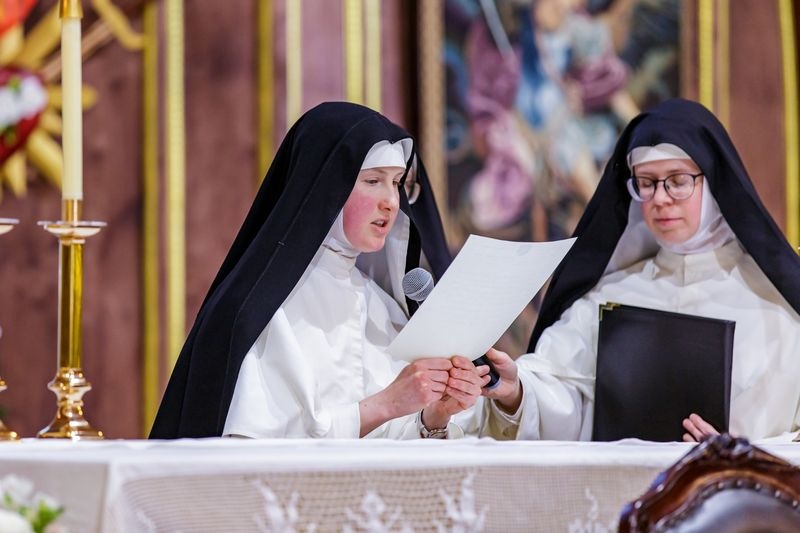
“I, Sister N., offer and dedicate myself to the Church of N., …and I promise a conversion of my ways and life in community especially in poverty, consecrated chastity and obedience, according to the Gospel of Christ and the Apostolic way of life, according to the Rule of St. Augustine and the Constitutions of the Canonesses Regular of the Order of Prémontré, in the presence of Mother N., Prioress of this Church, and of the Sisters." (cf. Ordo Professionis O. Praem.)

I, Sister N., offer and dedicate myself to the Church of ...
In keeping with the ancient canonical tradition of our Norbertine Order, our communities are called by the name of the church they serve. At solemn profession, we dedicate ourselves to the church of our canonry, the concrete place in which we will spend the rest of our life carrying out the solemn worship of God with all the beauty and splendor of the Liturgy and its Latin chants. Here at the Bethlehem Priory, we make profession to the Church of the Immaculate Virgin Mary and Saint Joseph of Tehachapi. Through divine worship, the attentive reception of the Word of God especially in Lectio Divina, and in daily taking up the Cross of Christ as the only path to profound charity, the communio of the Church of Christ is to be brought to life: first in our priory, then among the faithful, and even in the whole world. This communio, the fruit of liturgical prayer and of listening to the Word of God, is at the heart of our Norbertine life and mission.
“On the day of her profession, each sister of our Order offers and dedicates herself to a specific church, in which the Church of Christ is truly present, and is immediately incorporated into a religious community, a canonry of the Premonstratensian Order” (Constitutions, n. 18).
…and I promise a conversion of my ways
“Holiness is fitting to your house, O LORD, until the end of time” (Ps. 93:5).
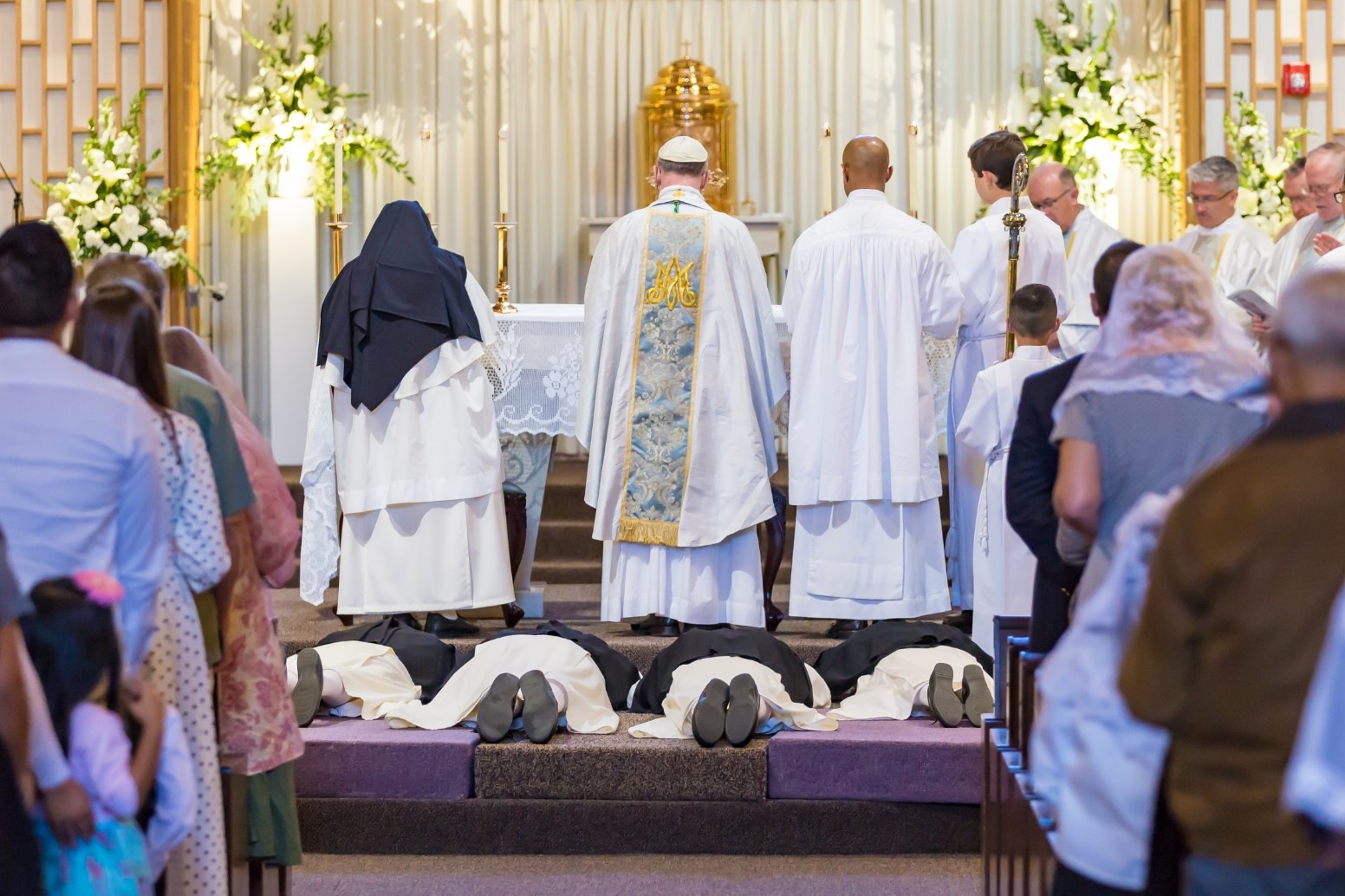
Norbertine Canonesses vow a life of unceasing conversion as the necessary means to live fully for the Lord and for His Church, and to worthily carry out the worship of God. The life of conversion is a daily renunciation of the spirit of the world, which is the spirit of self, in order to embrace the Gospel of Christ and a life of perfect charity. In the spirit of our holy father St. Augustine, our Constitutions remind us that charity and humble service are the tokens of our conversion (cf. n. 43). As Christ called us to take up our cross daily and follow Him, our promise of ongoing conversion allows us continually to renounce our past sins and failings, begin again, and strive always to live in greater conformity to Him and greater communion with one another, relying on His grace.
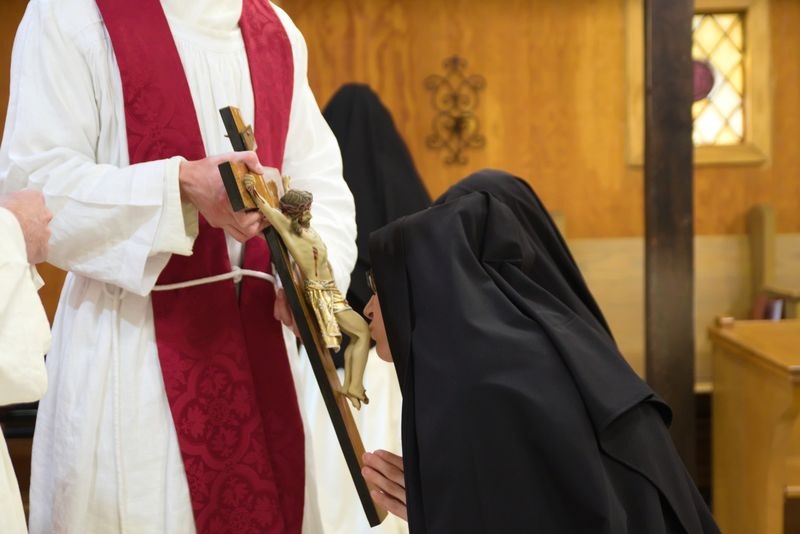
“The common life demands from us ongoing conversion to God and to our sisters” (Constitutions, n. 43).
…and life in Community
Conversion of ways opens us up to a joyful life in the community of our sisters, with whom we are bound in a lifelong promise of stabilitas in loco ("stability in place"). Our community life is characterized by an emphasis on unity of heart and mind, by possessing all things in common and sharing spiritual resources, by the common celebration of Sacred Liturgy, and by work in common, a shared table, and daily recreation together. The common life requires the asceticism of daily laying down our lives for our brethren, and reaches its fullness in reciprocal openness, affection, understanding, and forgiveness. Since a Norbertine community is a microcosm of the whole Church, which is the Mystical Body of Christ, and a strong common life is essential to an authentic living out of our charism. “This unity among sisters manifests the coming of Christ and from it arises great apostolic fruitfulness (cf. John 13:35; 17:21)” (Constitutions, n. 15).
“The chief motivation for your sharing life together is to live harmoniously in the house, and to have one heart and one soul seeking God” (Rule of St. Augustine, I).
…especially in poverty, consecrated chastity and obedience
As Norbertine canonesses, the ideal of the Vita Apostolica is manifested especially through the practice of the evangelical counsels (cf. Constitutions, n. 45). Our profession of the evangelical counsels conforms us “more fully to that kind of poor and virginal life which Christ the Lord chose for himself and which his Virgin Mother embraced also” (Lumen gentium, n. 46). Included in these counsels, which are common to all religious, are the renunciations of possessions, of marriage, and of our own self-determination and will. These renunciations help to detach us from the things of earth in order to fix our whole attention on the things of Heaven.
The evangelical counsels “have as their aim the turning away of man’s mind from love for temporal things, so that his mind may tend more freely to God, by contemplating him, loving him, and fulfilling his will” (On the Perfection of the Spiritual Life, St. Thomas Aquinas).
According to the Gospel of Christ and the Apostolic Way of Life…
The life according to the Gospel, which St. Norbert proposes for us, is summed up by his ancient biographer in the words “to follow the Sacred Scriptures and to have Christ as guide,” and thus is to preach the Gospel in poverty and to die with Christ in a spirit of penance, in order that we may live with the resurrected Christ. The Apostolic Life is lived in imitation of the life of the early Christians described in the Acts of the Apostles, namely, under the guidance of the Holy Spirit, to have one heart and one mind; to hold all things in common; to persevere in the teaching of the Apostles; to persevere together in prayer with Mary, the mother of Jesus; to break bread with joy, that is, to have the Eucharist as the center of all life; to give witness to the resurrection by our manner of life (cf. Acts 1:13-14; 2:42-47; 4:31-35; 6:1-7, etc. ).
“We wish to live the Apostolic Life” (St. Augustine).

According to the Rule of St. Augustine and the Constitutions of the Canonesses Regular of the Order of Prémontré.
Our life in the monastery is governed by our Rule and Constitutions. Seeing him as the one who best understood and put the Vita Apostolica into practice (cf. Constitutions, n. 35), our holy father St. Norbert chose the Rule of St. Augustine for his first community. St. Augustine's Rule is notable in framing the whole of our life in terms of love of God and neighbor and its emphasis on the common life, insisting that all the members of the community possess everything in common, and yet providing to each member what she needs, even if that means not giving the same things to everyone. Our Constitutions take the rich tradition we have received from our holy fathers Saints Augustine and Norbert and apply it concretely to our religious life today.
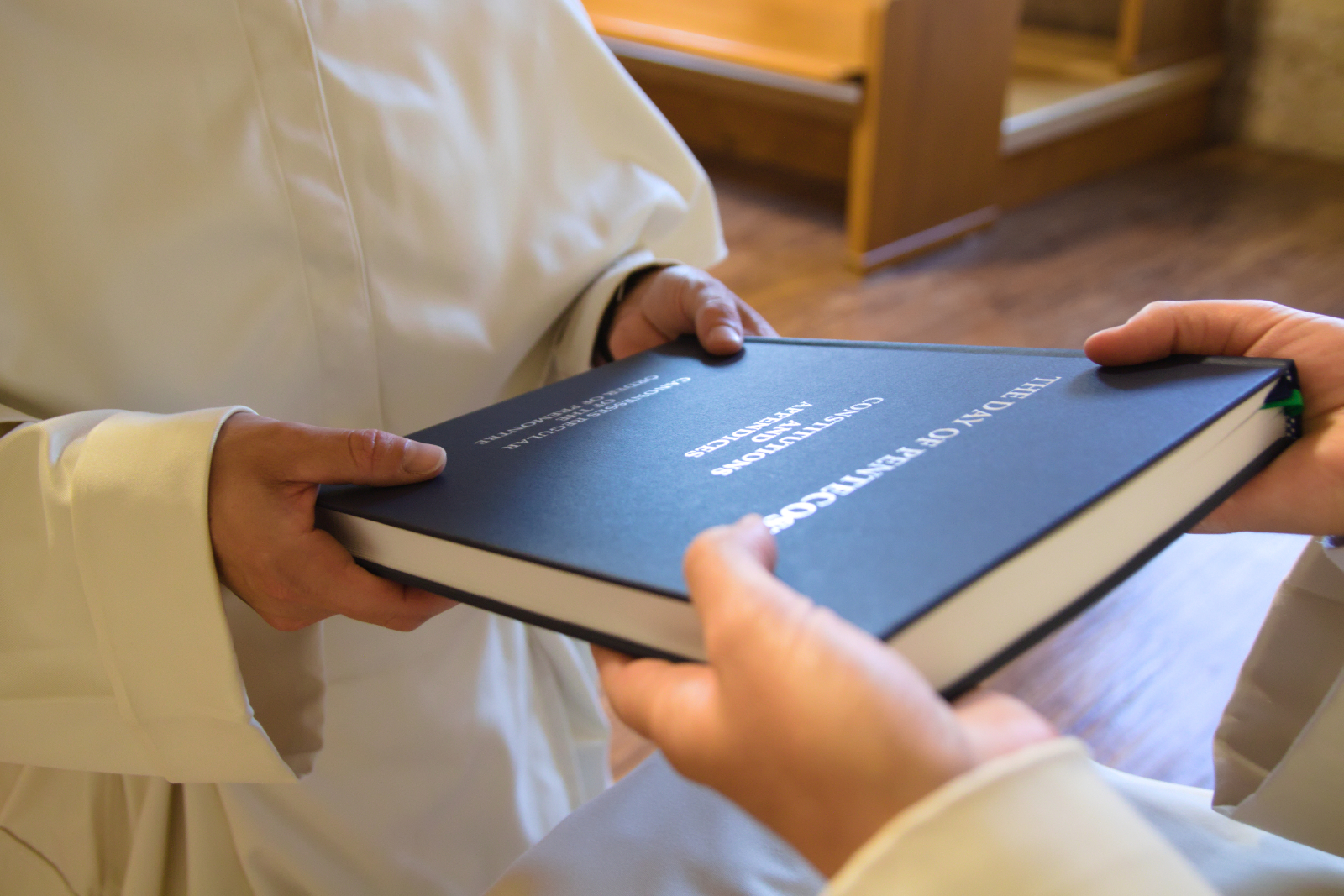
“Without organization and without a rule, and without the instructions of the Fathers, it is impossible to fulfill the apostolic and evangelical mandates.” (St. Norbert to his first followers, Vita Norberti A, Ch. 12).
In the Presence of Mother N., Prioress of this Church, and of the Sisters.
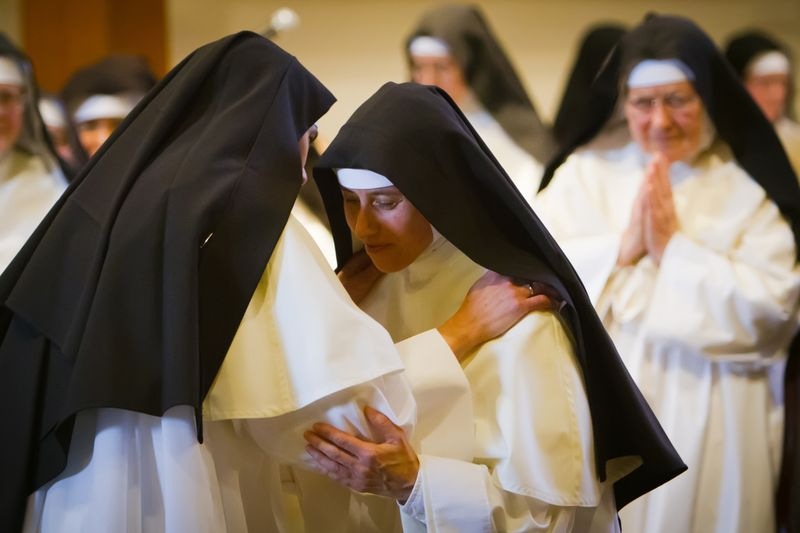
We profess our vows in the presence of our Mother Prioress and all the sisters of our Bethlehem Priory, trusting in their prayers and support in our common journey to God. The spirit of a Norbertine community is a familial one. Our Rule exhorts us to obey our superior “as a mother,” that is, as someone who not only legislates and corrects but also provides, nurtures, guides, and encourages, and all the members of the community are truly sisters. After the newly professed canoness has signed her vows on the altar, and the prayer of consecration and her incorporation into our canonry have taken place, the other solemnly professed canonesses welcome her into their company with the kiss of peace as the choir chants Psalm 133, the “Ecce quam bonus...”: how good it is when sisters live in unity, as one heart and one mind on the way to God!
“The Prioress has the duty to encourage with vigilance, and even to demand, the fidelity which we have promised to God and to the society of our sisters, in order that the community may progress more and more toward a fuller communion of all the members in Christ” (Constitutions, n. 54).

“Hold out to your handmaiden, Lord, the right hand of heavenly assistance, that she may seek you with all her heart and merit the granting of what she asks.”
– Prayer over the new Canoness during the Octave of her Solemn Profession
(On each day of the Octave, the whole community chants Psalm 127 after Lauds, Sext, and Vespers, asking God to grant her all the graces needed to live out her vows faithfully for the rest of her life.)